Darwin, where a CRO team keeps what it learns
Trafilea’s UX and CRO teams kept finding problems on the stores and running A/B tests, with nowhere to keep either. With the UX team I designed Darwin, an internal AI platform where a finding goes straight to the developers and every test result stays easy to find. Bugs on our stores now get fixed the same day.
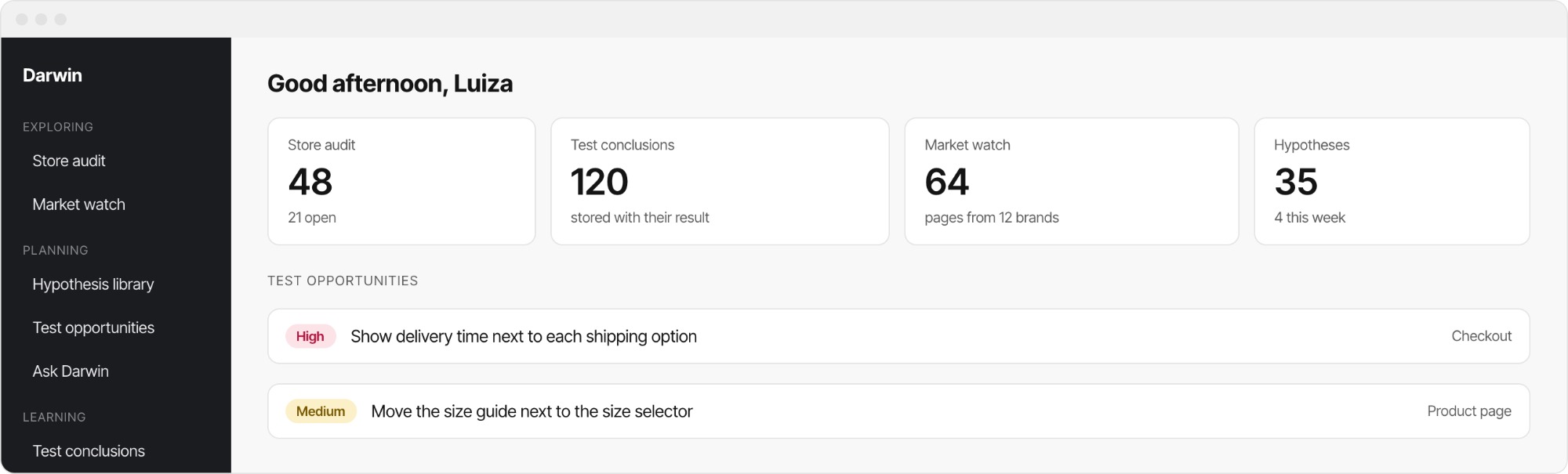
Designers kept finding broken pages, and had nowhere to send them.
Whoever found a problem had to go and tell a developer in private, and nobody could say how long a fix took.
What past A/B tests had taught was locked inside VWO, far from where designers work.
We shaped the idea as a UX team, then each designer built a version.
We argued about what the tool should be, built our versions in Lovable and presented them. The product took the strongest parts of each.
Mine started from a designer’s question: what do we already know about this page? Three ideas made it into Darwin.
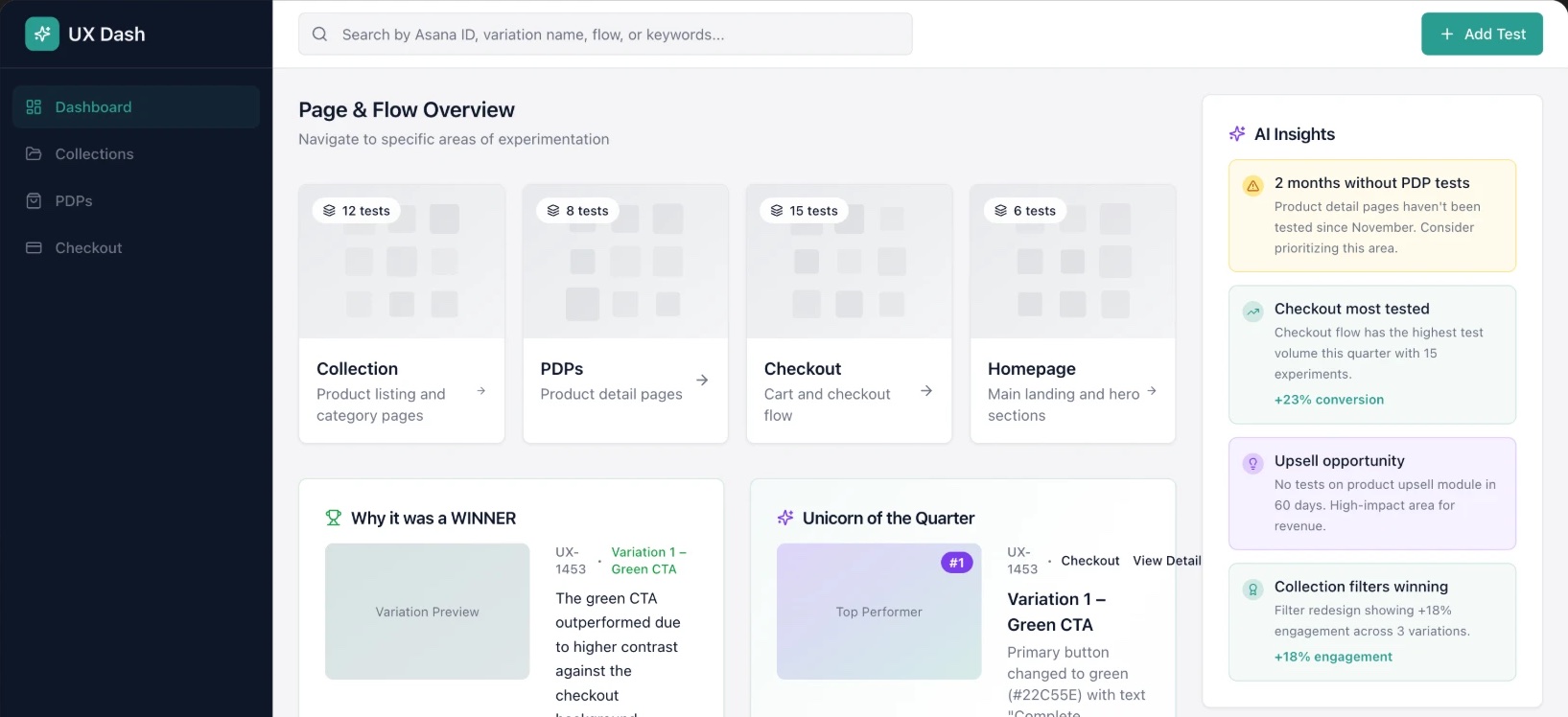
Collection, product page, checkout, homepage, each with its own history.
A short explanation in plain words next to each result, because a lift alone teaches nothing.
Notes like “two months without a product page test”, to show where nobody is looking.
No developers. Designers shipped it with AI.
After the Lovable versions, we moved the product to Cursor, connected it to Supabase and put it live ourselves.
No developers and no other teams involved: the UX team designed, built and shipped Darwin with AI as the tool.
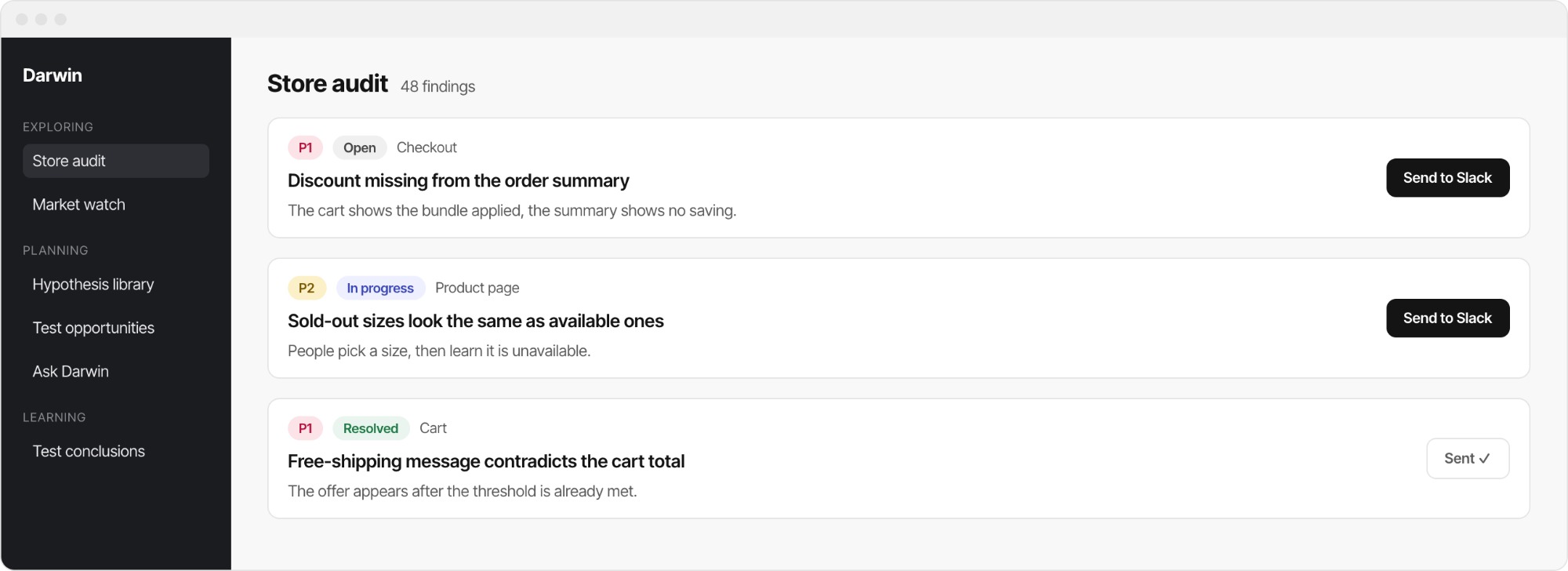
A problem found on the store goes straight to the developers’ Slack.
It keeps its status, so everyone sees what is open, being fixed or done. A private chat became a workflow every team can follow.
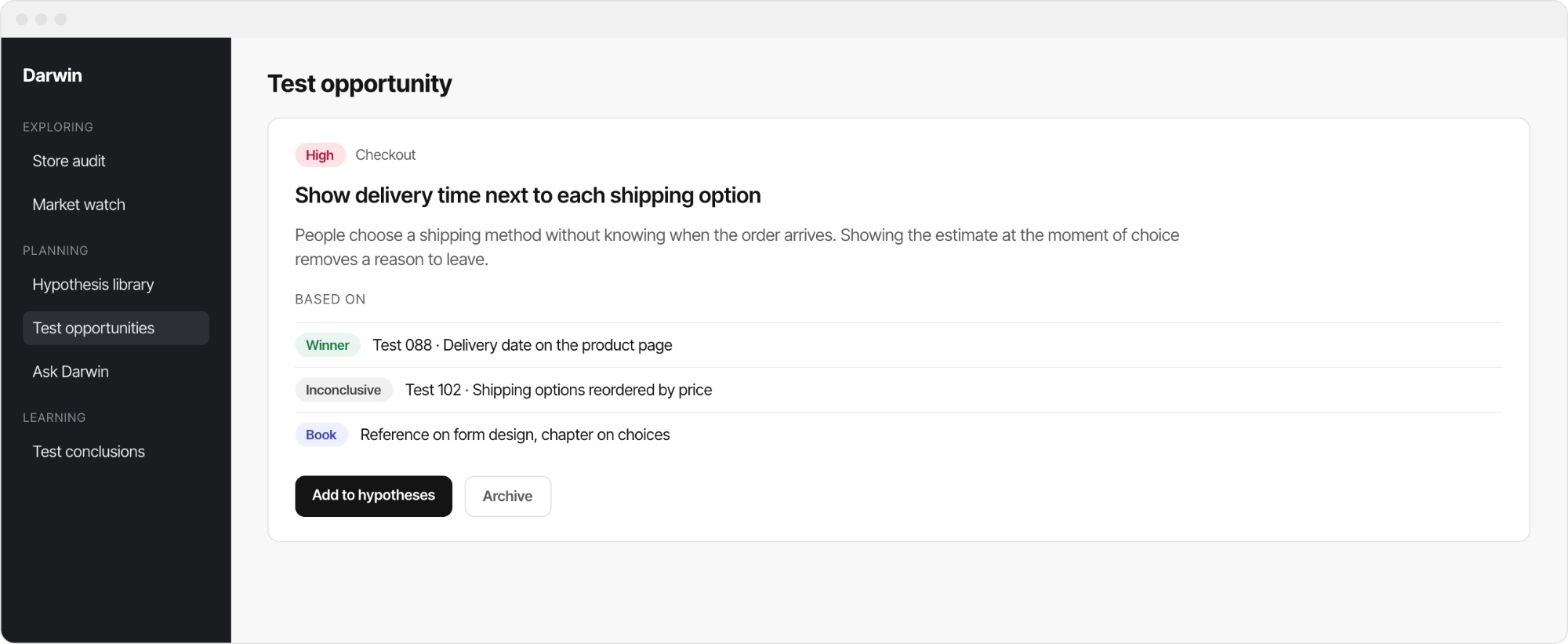
Darwin drafts the next test and shows where the idea came from.
This is the part I own. Every suggestion names the past tests and references behind it, so a designer can check the reasoning before spending a test slot.
Same day
A broken store page costs sales for as long as it stays up. Now it gets fixed the same day, sometimes within hours.
Before Darwin nobody could even tell how long a fix took. Today the UX and CRO teams work from it, about ten people each, and new tests can start from what the company already learned.
It doesn’t have great ideas on its own. It points where to look; the designer decides.
It doesn’t know our customers yet. I now own activation: other teams opening Darwin, getting it the first time, and coming back. Customer experience is next to join.
Screens redrawn with sample data. The real platform holds company data.